A lot of my recent posts have been about the experience of "waking up." For those of you who are new to this blog or who have bad memories and short attention spans, here's what I mean:
I'm going along, living my life and suddenly I realize that I haven't been living my life.
I realize that everything I've been doing for I-don't-know-how-long before that moment has been automatic. At the moment of realization everything is still automatic, but I'm now aware that it's automatic. That's waking up. I just woke up. Not doing anything yet. But awake. And watching.
I did it just a moment ago. I started writing this post on automatic, and then I woke up and moved from a state in which I was automatically and mindlessly writing to the one I am in now -- in which I am still automatically writing, but no longer mindlessly. I am aware of it. Awake.
So: before I woke up who or what was doing the writing?
Surely it wasn't me. I just woke up.
I have a fuzzy memory of things that happened before I woke up, but that's just a recording that my brain made while I was asleep. Not even a very good recording. It's got huge gaps. The recording includes starting this post, futzing with the title, grabbing links to earlier related posts about waking up (which originally were near the top and now might appear further down). All done without waking up.
So who did the writing?
Theory 1: a demon did the writing. If so, it's a very nice demon, not like the one in "The Exorcist." It possessed me and wrote all the words that appeared before I woke up. It wrote something like what I might have wanted to have written had I been awake. But then I woke up. And, nice demon it didn't do nasty things with crucifixes to stay in control. It was there just a moment ago, helping me. It seemed friendly, helpful and cooperative. It keeps writing as I watch it.
Theory 2: a computer simulation did the writing. My brain is a powerful neural network. It's an organic computer. The neural network has been trained and the computer programmed to simulate the behavior of a human being. The brain is hardware. The programming and training parameters are software. Let's call the simulation MikeSim.
Unlike the demon theory, there's science supporting the MikeSim theory.
Babies start out with some basic ROMed in behavior, a bootstrap program that lets the environment, especially their parents, install and tune higher level routines. At some point kids develop a primitive sense of self. Kids say "I want" but they have little understanding what what "I" really means. That initial sense of self is just part of the conditioning. Over time it changes, but it's still conditioned.
Some people (me, for example, and you, I hope) at some time in their lives experience a different, and more profound sense of self. I don't know what that might be for you. For me it is something that's capable of the "waking up" experience. I experienced something like that many times before I read Harris book. He just gave it a name and led me to realize how much time I spent "asleep."
So back to MikeSim.
MikeSim is awesome. It can tell jokes and (even harder) make up witty comments on the fly and in context. It shows empathy. It experiences grief and anger -- or what seems a lot like empathy, grief an anger. And it writes blog posts.
MikeSim seems a lot like me. And why not. I programmed it that way. Once my parents and teachers had done the initial programming, I started to get involved. Some programming was done by the environment that I found myself in, and some was done by me.
At least I hope so.
A substantial part of this post was written by MikeSim. Even though I first woke up while writing this post just before I wrote the words "I did it a moment ago," I've had the waking up experience many times while writing the rest of this. So I must have had the going to sleep and letting MikeSim take over experience, too.
So who is writing these words -- RIGHT NOW? Honest answer: I don't know for sure. It might be me. It might be MikeSim. Right now I'm sitting here. I'm watching my fingers move over the keyboard and I'm seeing words appear. When I wrote the words RIGHT NOW it was a little different. Those words did not just flow. They got put there.
Maybe by me.
MikeSim is awesome, but it's been living too much of my life. My goal for the year is to use MikeSim as more of a backup system.
Links to other related posts (as promised): this one about the Sam Harris book that started waking me up, or this one about editing what I write; this one about my $100 latte)
And then. Holy shit! Did I fall asleep again?
Showing posts with label Sam Harris (author). Show all posts
Showing posts with label Sam Harris (author). Show all posts
Dec 31, 2015

Dec 24, 2015
Waking Up
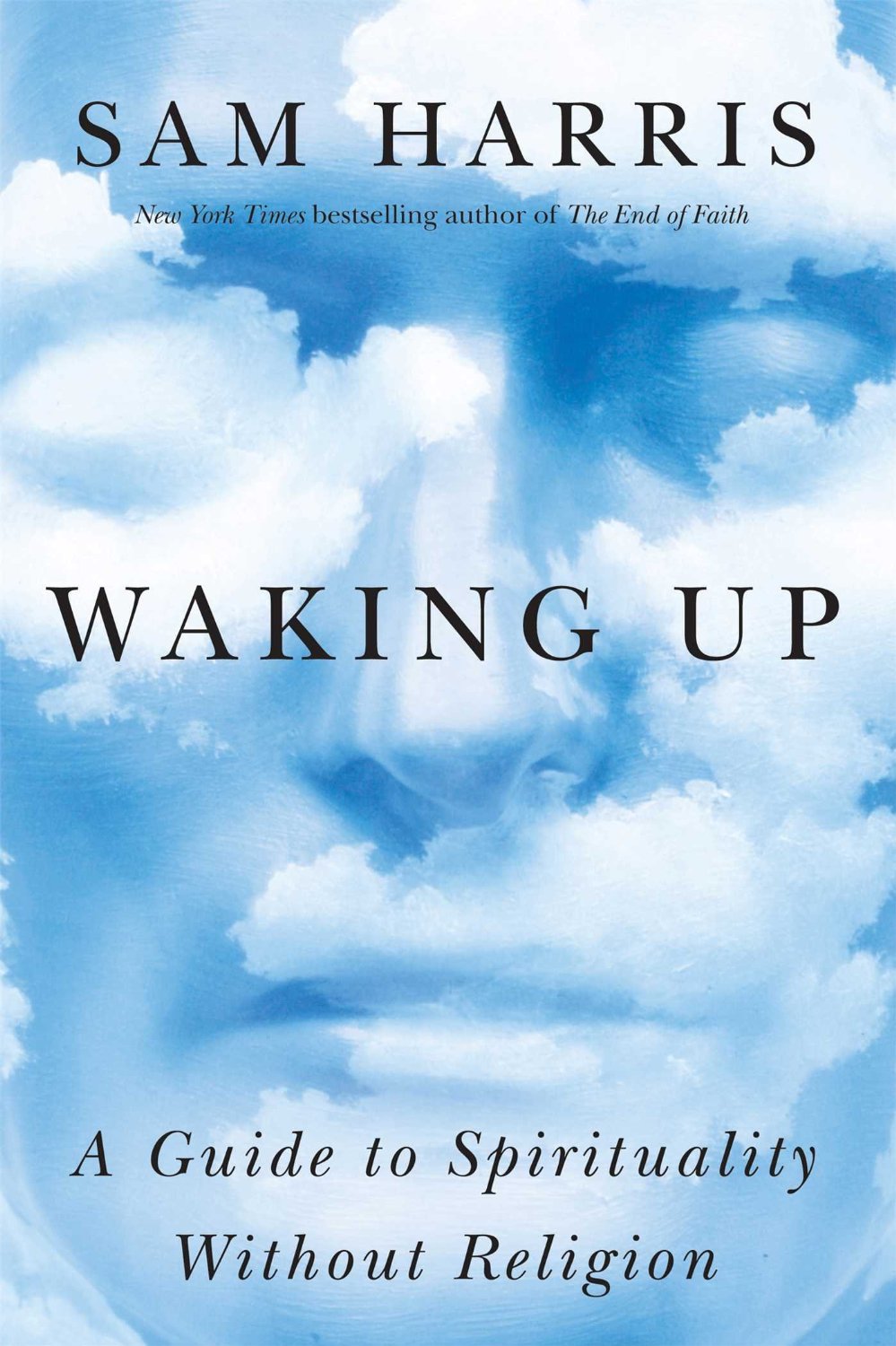
I've made reference in another post to Sam Harris' book, "Waking Up," and to some of what I learned from that book here. I recommend reading it. (The book, not just the posts.)
I got several BIG insights from his book. That's BIG WITH CAPITAL LETTERS. I've read mindfulness literature over the years, so the bar is pretty high for new insights that I would call BIG.
WITH CAPITAL LETTERS.
BIG!
BIG IDEA ONE is that the standard mindfulness practice is workable, but inconsistent and inefficient. It's workable because people have been doing it for thousands of years and getting results. It's inconsistent because there's no way to know how long it will take any one person to achieve any particular state of awareness, enlightenment, whatever. It's inefficient because it takes a long time.
But there's a better way. It's possible to point someone toward that which meditation is trying to lead them to. This pointing out instruction is part of the practice of Dzogchen, which Harris had studied. So he pointed out this.
Imagine that your in instructor directs your attention to a window. He tells you that if you practice every day looking at that window, that one day will come a moment when you will "see things differently" and when you experience the difference, you'll know it. This will happen, he tells you, if you practice diligently, with focused attention.
Another instructor prepares you differently. She says: If you just look through the window you'll see whatever is on the other side of the window. But if you look carefully, you may catch your reflection in the window. That moment of seeing your reflection while looking through the window is what you are trying to experience.
You may not catch your reflection right away. It might depend on the light, or where you are positioned. But if you are looking for your reflection, you'll find it a hell of a lot faster than if you are just looking through, toward, or out the window waiting for "something different."
BIG IDEA TWO. A description of the "reflection" that Harris wants me to look for. It is the experience he calls "waking up." And he uses pointing out instruction to give me an idea where to look.
Imagine you're in a theater, watching a movie. You are immersed in the story. Your attention is captured. You are emotionally engaged. Then suddenly you realize that you're sitting in a theater, surrounded by other people, watching light projected on a screen. A moment ago you were entranced -- in a trance. Now, for a moment you are in a different state. You're still aware of the story that's still playing out on the screen--but you are also aware that you are outside that story. You are not in the story, but watching it. That particular spell is broken. That's "awake." He says: "Most of us spend every waking moment lost in the movie of our lives."
Imagine you're in a theater, watching a movie. You are immersed in the story. Your attention is captured. You are emotionally engaged. Then suddenly you realize that you're sitting in a theater, surrounded by other people, watching light projected on a screen. A moment ago you were entranced -- in a trance. Now, for a moment you are in a different state. You're still aware of the story that's still playing out on the screen--but you are also aware that you are outside that story. You are not in the story, but watching it. That particular spell is broken. That's "awake." He says: "Most of us spend every waking moment lost in the movie of our lives."
That made sense to me, and if it hasn't happened to you already, take a moment and look for that metaphorical reflection in the window. Take a moment to step away from whatever engagement you have with what you are reading, and -- while continuing to read -- recognize that you are sitting or standing somewhere, looking at black shapes on a white background (or white on black if you are one of those people) and realizing that somehow your eyes, scanning over the shapes are producing words and/or ideas in your head.
That's a little of the experience of waking up.
That's a little of the experience of waking up.
After reading that I started experience more and more "waking up" moments. I would realize that I was "awake" and that up until that moment I had been in a trance, "watching my life" the same way that I watched a movie.
BIG IDEA THREE, and the biggest of all: Harris says that the conventional self is an illusion. We know we have bodies, and know we have brains, and that somewhere in our brains is something called a mind, and some part of the mind is a "self" that makes decisions, causes actions, and from time to time "wakes up."
But what is that "self" that "wakes up?" And is it an illusion?
But what is that "self" that "wakes up?" And is it an illusion?
He says: the way you tell an illusion from something real is to examine it. You look at it more closely, more deliberately. If you examine something and it changes to something completely different--or disappears entirely, that's a sign that what you first saw was an illusion.
So now as soon I "wake up" and feel that "I," my "self," am no longer in my usual trance, I look to try to examine "that which is now awake." When I do this, when I turn my attention toward whatever I just identified as "my self" when I "look" in a direction I would describe as "inward" I IMMEDIATELY feel my attention shoot "outward" toward the rest of the world. I have an immediate sense of WOW!!! And I'm even more awake.
It's as though the "self" that was perceiving the world was just a window or a screen. By looking to examine it, I see more clearly what's on the other side.
It happens every time. Looking for "myself" (once there's a self to even look for) I always find myself transcending "self" and seeing the universe.
This is interesting. And I'll probably say more about it later, but for now, let this simple description suffice.
If this makes sense, I encourage you to take those same steps. Try to be aware of moments when you realize that you were in a trance and now, for the moment, are not. When that happens try looking to see whether what just woke up is an illusion or real. If it works for you the way it does for me, you're in for an interesting experience.
Dec 17, 2015
Reading what I write
 |
| Awake (Godsmack album) (Photo credit: Wikipedia) |
Question for future me:
Will you please let me know why the fuck you never read what I've written?
I kill myself trying to get these things done, and then what?
Why am I writing if you never read what I write?
WTF? Really?
Anyhow.
It took me a while to get to that post. So let me tell you (future me, and others) the story. Or one of the stories. First tell you the stories I am not going to tell.
I'm not going to tell you the story that begins: "It all started when I reached 70, said 'WTF!' and started this blog."
I'm not going to tell you the one that begins: "It all started nearly 73 years ago, when I was born." Or the one that starts "It all started nearly 74 years ago, when my parents fucked."
I'm not going to tell you the one that begins: "It all started 13.8 billion years ago, when the universe exploded into existence and pretty much everything started."
All true. All different stories. But not the one I'm gong to tell.
Today's story starts in May, when I read Sam Harris' book Waking Up. I realized (more than ever in the past) that I spent most of my life "not awake." And I wanted to wake up more often and for longer periods.
What was I doing when "not awake?" Maybe in a waking dream. Maybe immersed in an illusion. But not, as I now define the term, awake.
What is awake?
For most of the time that I've been writing this, I've been "not awake." My conditioning, my programming, knows how to write blog posts. It does a pretty good job. A kick ass job, actually. I don't have to wake up to supervise it. I don't have to do a fucking thing. Sit down, type, and it just happens.
But now, right this moment, for this part of this post, I am awake. (Or have been for parts of the writing and editing, but not all.) The difference between blogging while not awake and blogging while not awake probably can't be perceived by anyone but me.
But I know.
When I am blogging while I am awake I do everything that I do when I'm blogging while not awake. The only difference is consciousness. In one case I am not conscious that I am doing what am doing it. I just let the system do it. In the other, there is. It may not be doing it, but it is conscious.
Right now, I am sitting at my computer keyboard, moving my fingers and words are appearing. That's been happening all along. Or at least I assume so, because--how else did those other words get here?But most of the time I was unaware. Now I am.
So who was writing the post before I woke up. And who is writing during the few moments that I've been awake?
More important: who is going to push the "Publish" button.
Reply from future me to the question that past me asked at the top. (Well, a short distance in the future me, but a future me is a future me, right?)
"Maybe it's because you make finishing a piece such a pain in the ass that by the time you finally press Publish I never want to see the fucking thing ever again.
"I'm just saying.
"PS: maybe you should read what you wrote about the self being an illusion.
Good job, future me. Nice way to wrap up this post.
The thing that I learned from rereading that post is this: no one needs to push the button.
Sep 18, 2015
Writing mindfully
Repeatedly I say (to anyone who is within range and shows the smallest amount of interest) "I love to write."
Anyone who survives that might then hear me continue to my frustration: "And I don't write. And I don't know why. And I am frustrated."
And if they stick around they'll be subjected to a much longer rant on the unhappiness borne out of my strong desire to write and endless frustration because something, I know not what, gets in the way of writing.
Grr!!!
Occasionally I'll come up with a fix: a solution to the problem of writing. Sometimes nothing comes of the solution. Sometimes it leads to a burst of writing. Eventually the burst ends and frustration sets in.
This might be one of those short-lived fixes. Or it might be different. We'll have to see.
The change comes from a mindfulness practice I'm working on: first becoming aware of myself, and then looking for the "self" of which I am aware. When I look for the self I find that it disappears. According to generations of teachers of Buddhist-style meditation, that is because the self is an illusion. You'll find that out, they say, if you meditate long enough.
But looking for the self, rather than just meditating is a shortcut that I learned after reading Sam Harris' book "Waking Up." The the difference between a reality and an illusion, Harris says, is this: look at something carefully. If you see more detail, it's probably real. If it vanishes or if it turns into something else, it's probably an illusion.
So me: I look inward for the self, and I find there's nothing there. I'm looking outward instead. No self. Only the present moment. Not even "me" in the present moment.
Just the present moment.
Self appears to be an illusion.
Today I did not simply look for "the self that was aware of itself," but for "the self that wants to write and is frustrated."
And I discovered that there was nothing there.
Nothing wants to write.
Nothing is frustrated that it isn't writing.
There was nothing but the then-present moment.
How can that be any good? If my goal is to write, and the "me" that has that goal disappears taking both its frustration at not writing and its desire to write with it, what then? How can I get myself to write if there's no me that wants to write and no me to be frustrated when it doesn't?
Really!
How can I write when experience has taught me that one of the few ways I can get myself to write is by increasing the frustration that I feel when I don't write? I need to increase my frustration until it is greater than whatever pain I might anticipate that I'd feel if I did write. Then I'll write.
How can I write if I'm not feeling negative feelings that are greater than the negative feelings that stand in the path of writing?
I mean, really!
The answer is: I don't know, but here I am. I've looked for "the part of me that I wants to write." I found nothing. And I'm writing.
Now, in this moment, there's no me that who wants to write.
There's no me that is upset about not writing.
There's nothing but the present moment--and the writing that is in that moment.
I am gone, and all that's left is the writing.
Subscribe to:
Posts (Atom)