Dec 27, 2015

Warm up before writing: theory and practice


Photo credit: Nicholas_T via Foter.com / CC BY


Today I started out having a crap time writing. Really crap. I ended up feeling as though I was wasting my life. And I ended up writing about that feeling.

This happens a lot: both the "having a crap time writing" part and the "feeling as though I was wasting my life" part.

Usually I just soldier on. Eventually the feeling passes. And eventually I get back to writing.

Today, I did something better. I figured out what's wrong, and what to do about it. I learned something that will stick, at least for a while. But we'll see. In the meanwhile, I'm going to post this hoping that both future me and other people find it useful or at least interesting.

So here's the practice, and the theory behind the practice.

The practice: warm up before you write. Don't write without warming up. Don't.

750 words is one of my venues for warming up. So is a notebook in which I can write longhand. The ideas is to free-write, to just put down whatever comes into my head. To stretch the writing muscles with waking the internal writing critic.

Secondary practice: if you run into trouble don't grind. Do some stretching exercises. Then go back to work.

Simple.

Now I just have to do it.

The theory:

Jumping right into the middle of a tough piece of writing is madness. It's like playing a game without warming up first. It's a good way to get hurt. That's what's happened to me today.

To carry out any intellectual task requires mental resources available to that task. I think the mind marshals those mental resources this way. Multiple processes run in the mind, and at any moment each has some number of Mental Resource Units (MRUs). MRUs are assigned to tasks as they need, require, or demand them. Some are held in reserve.

Writing is not a single process. There are processes that produce the words; there are processes that monitor what comes out to make sure it makes sense; processes that monitor over-all quality; even a process that moves my fingers. There are always processes too, running in the background. There are processes that monitor my state, internal and external. And there are processes that were previously solving other problems and which have not yet shut down.

Sitting down to write kicks off the processes that produce writing. They might quickly marshal some MRUs, say, 100. That's the  amount needed to do a simple bit of writing. As the writing goes on they might marshal more, or they might release some MRUs. I was doing a demanding bit of writing, one that needed way more than my initial allocation of 100. Let's say I needed 200 MRUs for a satisfactory job.

Since I had nowhere near the number of MRUs required, my writing was not up to the task. Or in plain English: it was shit. The writing quality monitor detected this, grabbed some MRUs and started ringing alarms. That woke up the state-monitoring processes, which grabbed some more MRUs and started  broadcasting its assessment of the state of my life. "Attention all units. I am wasting my life. Again." And that fired up a whole bunch of reactive processes that absorbed more MRUs. Pretty soon, almost no MRUs available for writing said challenging piece.

I backed off and went to 750 words to write, but by that time I was in full reaction, and didn't have enough MRUs for that.

Sucks!

Warm up before you write. Stretch if you get stuck.

In another universe I started with warm ups. I did my free-writing in 750 words. The 100 MRUs that I start with expand to 150 and then 200 and then more. When I turn my attention to the tough writing, I've got the MRUs I need to tackle it.

So goes the theory. How does this go in practice?

Remember: "In theory, theory and practice are the same. In practice, they are different."

This is Post # 2 on the day.


Wasting my life

An hourglass
An hourglass (Photo credit: Wikipedia)
From time to time I feel as though I've wasted my life and I'm continuing to waste it. Not all the time. But sometimes, yes. Like today, for example.

From the outside, that seems false. It looks like I've had a pretty good life. I'm still fairly active and productive for a guy in my stage of life.

"My stage of life." Translation. Old.

From the inside that feels accurate. But from time to time, what I think and how I feel is: "I'm wasting my life."

To which I now ask: WTF? What does that even mean? It makes no sense.

Maybe the Internet can make sense of it. So I ask.

I Google questions like "How do you waste your life?" I find most links are based on the "gift from God" theory of life. It works this way. God gave you your life. But it's not an unconditional gift. You're supposed to do something with it. And the God theorists know what that is. And if you haven't done whatever the God theorists think you should do with your theoretical gift then you've wasted it. Simple.

To which I now ask, once again: WTF?

This whole God theory thing is so wrong for me on so many levels that I don't even want to start unpacking it.

The Internet can't help me, so I'm going to have to figure it out myself, the old fashioned way.

By thinking.

And the answer I come up with is this. I've still got stuff that I'm trying to do. Stuff that I think is within my capability. Writing, mostly. Like this post. And when I can't/don't write I feel that I'm wasting my life.

Like today: I had another post that I was working on. I started to try to finish it, and completely whiffed. Could not make progress.

So I tried something easier: I went to 750word.com, a web site designed to let you free-write. I got one sentence written. Just one. Couldn't concentrate. At all.

Wasting my life.

I took action. First some food. Then some sleep. Then back to writing on 750 words about what was going on. That helped, a lot. It led to me realizing that I needed to be a bit more disciplined about my writing.

Which I'll write about in my next post.

Shortly. After I post this.

Because I'm not wasting my life.

And I'm not going to fucking do things that make me feel like I am.

Dec 24, 2015

Waking Up


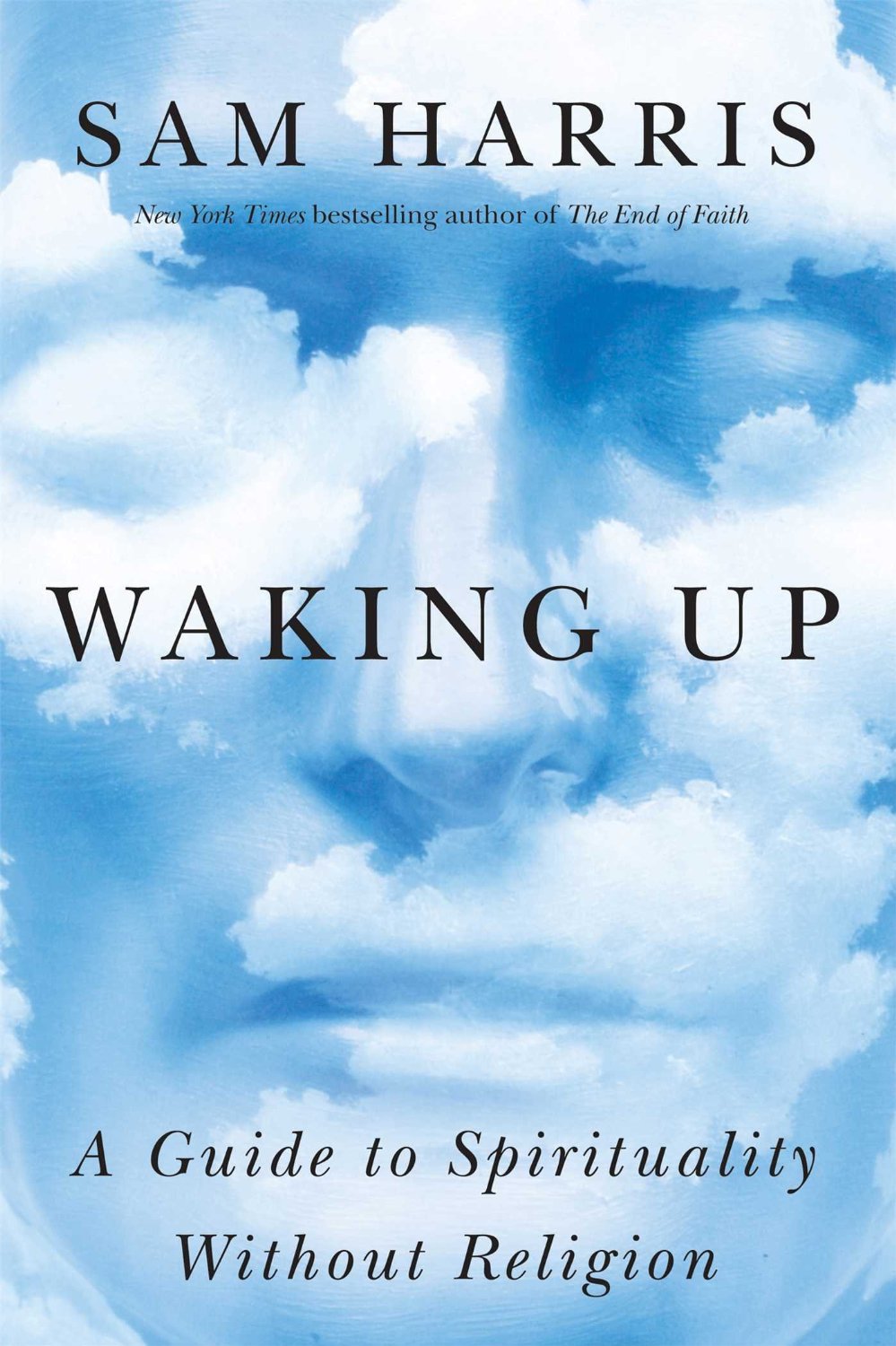
I've made reference in another post to Sam Harris' book, "Waking Up," and to some of what I learned from that book here. I recommend reading it. (The book, not just the posts.)

I got several BIG insights from his book. That's BIG WITH CAPITAL LETTERS. I've read mindfulness literature over the years, so the bar is pretty high for new insights that I would call BIG. 

WITH CAPITAL LETTERS.

BIG!

BIG IDEA ONE is that the standard mindfulness practice is workable, but inconsistent and inefficient. It's workable because people have been doing it for thousands of years and getting results. It's inconsistent because there's no way to know how long it will take any one person to achieve any particular state of awareness, enlightenment, whatever. It's inefficient because it takes a long time.

But there's a better way. It's possible to point someone toward that which meditation is trying to lead them to. This pointing out instruction is part of the practice of Dzogchen, which Harris had studied. So he pointed out this. 
Imagine that your in instructor directs your attention to a window. He tells you that if you practice every day looking at that window, that one day will come a moment when you will "see things differently" and when you experience the difference, you'll know it. This will happen, he tells you, if you practice diligently, with focused attention.
Another instructor prepares you differently. She says: If you just look through the window you'll see whatever is on the other side of the window. But if you look carefully, you may catch your reflection in the window. That moment of seeing your reflection while looking through the window is what you are trying to experience.
You may not catch your reflection right away. It might depend on the light, or where you are positioned. But if you are looking for your reflection, you'll find it a hell of a lot faster than if you are just looking through, toward, or out the window waiting for "something different."
BIG IDEA TWO. A description of the "reflection" that Harris wants me to look for. It is the experience he calls "waking up." And he uses pointing out instruction to give me an idea where to look.

Imagine you're in a theater, watching a movie. You are immersed in the story. Your attention is captured. You are emotionally engaged. Then suddenly you realize that you're sitting in a theater, surrounded by other people, watching light projected on a screen. A moment ago you were entranced -- in a trance. Now, for a moment you are in a different state. You're still aware of the story that's still playing out on the screen--but you are also aware that you are outside that story. You are not in the story, but watching it. That particular spell is broken. That's "awake." He says: "Most of us spend every waking moment lost in the movie of our lives."
That made sense to me, and if it hasn't happened to you already, take a moment and look for that metaphorical reflection in the window. Take a moment to step away from whatever engagement you have with what you are reading, and -- while continuing to read -- recognize that you are sitting or standing somewhere, looking at black shapes on a white background (or white on black if you are one of those people) and realizing that somehow your eyes, scanning over the shapes are producing words and/or ideas in your head.

That's a little of the experience of waking up.
After reading that I started experience more and more "waking up" moments. I would realize that I was "awake" and that up until that moment I had been in a trance, "watching my life" the same way that I watched a movie. 
BIG IDEA THREE, and the biggest of all: Harris says that the conventional self is an illusion. We know we have bodies, and know we have brains, and that somewhere in our brains is something called a mind, and some part of the mind is a "self" that makes decisions, causes actions, and from time to time "wakes up."

But what is that "self" that "wakes up?" And is it an illusion?

He says: the way you tell an illusion from something real is to examine it. You look at it more closely, more deliberately. If you examine something and it changes to something completely different--or disappears entirely, that's a sign that what you first saw was an illusion.

So now as soon I "wake up" and feel that "I," my "self," am no longer in my usual trance, I look to try to examine "that which is now awake." When I do this, when I turn my attention toward whatever I just identified as "my self" when I "look" in a direction I would describe as "inward" I IMMEDIATELY feel my attention shoot "outward" toward the rest of the world. I have an immediate sense of WOW!!! And I'm even more awake.

It's as though the "self" that was perceiving the world was just a window or a screen. By looking to examine it, I see more clearly what's on the other side. 

It happens every time. Looking for "myself" (once there's a self to even look for) I always find myself transcending "self" and seeing the universe.

This is interesting. And I'll probably say more about it later,  but for now, let this simple description suffice.

If this makes sense, I encourage you to take those same steps. Try to be aware of moments when you realize that you were in a trance and now, for the moment, are not. When that happens try looking to see whether what just woke up is an illusion or real. If it works for you the way it does for me, you're in for an interesting experience.

Dec 23, 2015

The other side of 70

70 years old? Really? Inconceivable.
I started this blog a few days short of three years ago, when I hit 70. In my initial post I complained how being 70 was, well, inconceivable.

... Just like Sicilian in The Princess Bride says. Inconceivable! Wasn't I thirty years old just a half hour ago? Or maybe that was forty. Or fifty. It's all flown by so fast.

And now, here I am, 70. Seventy. Sev-en-ty. Man that sounds old. But I don't feel old. I just feel like---like WTF!
Things have change in three years. It's no longer inconceivable that I'm 70 going on 74. What's inconceivable to me now is different. Like:

How the hell did I (with more than a little help from Bobbi) manage to run a business, maintain a house, raise three kids, watch the Celts and the Pats (she didn't help with that), maintain our own relationship and personal sanity, and still have time for friends, to and for this kind of foolishness? And a lot more.

Today it seems to take too much of the day to get through simple chores that I would have knocked off in a much shorter time.

I've even got the Internet to help me get stuff done. There's lots of stuff I don't have to figure out because someone on the Internet has already figured it out, and Google helps me find their answer. I don't have to write letters, stick them in envelopes and take them to the post office. I can send email. I don't have to go to the store to buy stuff, I can do it online. I've got 24x7 access to most  things. And...

Oh.

Well, maybe the Internet is a mixed blessing. If I was writing an essay like this, sans Internet, I'd be typing in my word processor and I would have been done long ago, because I wouldn't have taken time to find the original "essay" and link to it, because you can't link to a piece of paper. Or a file that's on your computer.

I wouldn't have groveled through YouTube's new, unfamiliar interface trying to find my fucking videos! To find them I had to go to my email (thanks, Google, thanks Internet) find an email in which I'd mailed a link, go to the link, reverse engineer my way to something called "YouTube Creator Studio" where some, but not all, of my videos have gotten squirreled away, then figure out how to get there on my own. That bit of yak shaving has probably doubled the time that I've spent writing this.

I wouldn't have searched for the photo of Wallace Shawn at the top of this post. Took less than a minute. But still. And yes, I know "inconceivable" is misspelled. Well, screw it. I'm not going to find one that's spelled right. Enough is enough.

So, yeah, it's a mixed blessing. But still, even not counting distractions, I'm lots slower than I was when I was thirty -- if I was ever thirty.

See that's weird. I have memories of the experiences of someone who seems to be me, but that person is so different from the 70+ year old me, that's it's hard to believe that it's me.

Not quite inconceivable, but close.


Dec 22, 2015

My $100 latte

This photograph shows a glass of latte macchia...
Latte Venti Pricey
(Photo credit: Wikipedia)
At Starbucks today I bought a pumpkin praline pecan yada yada latte, an exotic foofy drink.  I don't usually go that fancy, but I was in a good mood and indulged.

I remember my first sip. Nice! I was glad I'd indulged. I took another sip. Quite good!

Then I sat down, pulled out my computer and went to work on my programming project.

Fade out.

Fade in.

It's an hour later. Maybe more. Time vanishes (as do I) when I'm programming. Or blogging. Or other stuff. I've had a win and I want to take a break. I deserve one! I wonder if there's any latte left. I reach out, and lift the cup. Yes! Not much,  but some.

I have another sip.

And it's good!

I walk around, make a phone call and go back to programming.

A while later I take another break, heft the cup and find it's empty.

Later, much later, I consider: one latte. It was 20 oz. It cost $4.00. I enjoyed it. But I only experienced three sips.

What did I pay for?

How big is a sip? Well, of course your mileage varies. Even mine will. It depends on the size of your mouth, the intensity of your thirst , and the temperature of the sippand (the thing you sip) and maybe the phase of the moon.

While I'm writing this I'm sipping another latte and attempting to calibrate. (The things I do for science!) I've had 10 sips so far and I don't think I'm a tenth of the way through the 20 ounces. Small sips, because the latte is pretty hot. So let's make a hot sip = 0.2 oz, and a cold sip = 0.4.

So I experienced 0.8 oz, or 1/50th of my previous latte.

If that 1/50th was worth $4.00 (before blogging) then I should rationally have been willing to pay $100 to experience the entire thing. Or if someone had offered me three sips of their latte (two hot and one cold) for the bargain, discount price of $3.50 I should have jumped at the chance.

Not likely.

One more argument for being more awake, present, mindful.

We give up money and time and other things we value for opportunities to experience pleasurable and interesting things. But having the opportunity to experience them does not mean we actually experience them.

We also need to be present for the experience. If not, we end up paying a higher price for whatever part--if any part at all--we do experience.

In this case, I paid a ridiculously high price. $100 for a latte? Are you kidding me?

Every time I reach for the latte I'm drinking now, I pay attention. Smaller sips. More attention.

I'm determined to get my money's worth.

Dec 20, 2015

Yak shaving my way to awarenes

English: Shaving system with 2 blades. Wilkins...
Yak Shaving Tool (Photo credit: Wikipedia)
I spent an hour and a half yak shaving, this morning.

Ironically, I spent most of that time doing that which I was trying to avoid and didn't realize it until I was nearly finished writing this post.

Fuck!

Let me explain.

It started with a morning chat, in which I observed

"I do pretty well in the AM but the pattern is that I go more and more automatic as the day goes on"

Which is true. So my plan was:


About every so often (two hours I am thinking) I want to do a full reset. STOP what I am doing and do a bunch of stuff (TBD) to wake up and address the next block of time.

It's now 9:34. And I start do work on my "wake up" process.

So how to do that?

I thought: I'll create a Google Doc and every two hours or so I'll look back and write down what I learned and what I was thinking about and what I'm thinking about and what I'm going to do. And I'll use that as a reminder to stay awake, to be present, and not go into the state where I am mindlessly doing things.

Easy. Takes about ten seconds to set up a doc.

Except I'm pretty sure that I started a doc like that before. So I mindlessly browse through past docs looking for that one. Shaving the yak.

Yak shaving sometimes pays off in unexpected ways. In this case, I made a discovery. Several years ago by brother, sister and I went on a bonding trip to Arizona. With long hours of driving, I decided to pool our knowledge of family history and write it down. Which we did. I had my computer (of course) so I wrote it down. It's on a back up somewhere, and on my todo list is a task "find family history" that I faithfully recopy each time I rewrite my list.

But there it is! Some time ago I must have uploaded it to docs! Huzzah! So I write my brother and sister a quick email. The email time stamp says 9:40, so that didn't take too long. But I had no idea how much time it took.

I was deep, deep, in my yak shaving trance, and it was time to return to yak shaving.

After a bit more looking, I decided I would start a new one doc. Easy. Revision history says I started it at 9:42.

I copied the comments from the chat, the ones you see above, into it.

And I was about to note the date and the time, when...

Wait! 

If I'm going to put an entry in the doc every so often, doesn't it make sense to time stamp the entries?

And doesn't it make sense to make the process of time stamping automatic?

So doesn't it make sense to write a doc script that will do that?

As it happens, I have already found script like that, due to another yak shaving exercise. It puts in the date, not the date and time, but isn't that an easy change? I'll just cut and paste it into this doc and...

No. It's not easy, because I cut and pasted wrong. So I restart, and this time I do it right. And finally have it right, and yes, it wasn't that hard.

Yes it is. Here's my first automated time stamp entry: 

December 20, 2015 20:11

Yay. That took a total of 35 minutes, including finding the family history, and so on. So on to the main task: stopping, reflecting, and making a plan for the next block of time.

No, wait! Wait!

Wait!

It's not 20:11. That's like eight at night. It's ten in the morning. So my script is printing the wrong time because mumble mumble. 

But I can just change the script so it has the right time zone. Which takes some time to figure out.

And maybe it should run automatically the first time that I open it and put the date at the bottom. Which takes some time.

More mindless activity ensues as I encounter complexity on complexity on complexity, until, more than an hour later, nearly an hour and a half, including the short time I've spent writing this I'm ALMOST done.

And why, I now realize. WTF was I actually doing?

Well, I was working, automatically, to automatically time stamp a document whose entire purpose is to help me get myself off automatic.

Fuck!

Sorry, but, fuck.

Dec 17, 2015

Reading what I write

Awake (Godsmack album)
Awake (Godsmack album) (Photo credit: Wikipedia)
I rarely go back and read what I I have written. When I do I'm usually pleasantly surprised. Like today, when I read this post about writing mindfully. I'll come back that post in a minute. But first:

Question for future me:
Will you please let me know why the fuck you never read what I've written?
 I kill myself trying to get these things done, and then what?  
Why am I writing if you never read what I write? 
WTF? Really?

Anyhow.

It took me a while to get to that post. So let me tell you (future me, and others) the story. Or one of the stories. First tell you the stories I am not going to tell.

I'm not going to tell you the story that begins:  "It all started when I reached 70, said 'WTF!' and started this blog."

I'm not going to tell you the one that begins: "It all started nearly 73 years ago, when I was born." Or the one that starts "It all started nearly 74 years ago, when my parents fucked."

I'm not going to tell you the one that begins: "It all started 13.8 billion years ago, when the universe exploded into existence and pretty much everything started."

All true. All different stories. But not the one I'm gong to tell.

Today's story starts in May, when I read Sam Harris' book Waking Up.  I realized (more than ever in the past) that I spent most of my life "not awake." And I wanted to wake up more often and for longer periods.

What was I doing when "not awake?"  Maybe in a waking dream. Maybe immersed in an illusion. But not, as I now define the term, awake.

What is awake?

For most of the time that I've been writing this, I've been "not awake." My conditioning, my programming, knows how to write blog posts. It does a pretty good job. A kick ass job, actually. I don't have to wake up to supervise it. I don't have to do a fucking thing. Sit down, type, and it just happens.

But now, right this moment, for this part of this post, I am awake. (Or have been for parts of the writing and editing, but not all.) The difference between blogging while not awake and blogging while not awake probably can't be perceived by anyone but me.

But I know.

When I am blogging while I am awake I do everything that I do when I'm blogging while not awake. The only difference is consciousness. In one case I am not conscious that I am doing what am doing it. I just let the system do it. In the other, there is. It may not be doing it, but it is conscious.

Right now, I am sitting at my computer keyboard, moving my fingers and words are appearing. That's been happening all along. Or at least I assume so, because--how else did those other words get here?But most of the time I was unaware. Now I am.

So who was writing the post before I woke up. And who is writing during the few moments that I've been awake?

More important: who is going to push the "Publish" button.
Reply from future me to the question that past me asked at the top. (Well, a short distance in the future me, but a future me is a future me, right?)
"Maybe it's because you make finishing a piece such a pain in the ass that by the time you finally press Publish I never want to see the fucking thing ever again.
"I'm just saying. 
"PS: maybe you should read what you wrote about the self being an illusion. 
Good job, future me. Nice way to wrap up this post.

The thing that I learned from rereading that post is this: no one needs to push the button.

Pages